

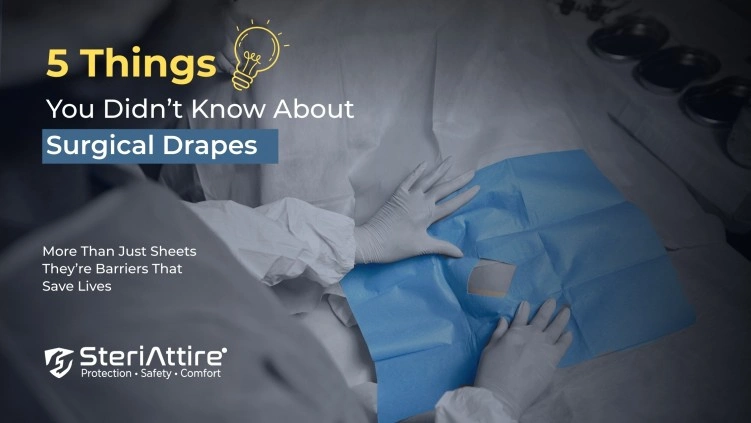




Five Things You Didn’t Know About Sterile Surgical Drapes (But Should)
When we think about surgical operation/procedures, the first thing that comes to mind is surgeons in gowns, gloves, and masks. But there’s one silent hero in every operating room that rarely gets the spotlight, the surgical drapes. More than just “plastic sheets”, these protective barriers play a crucial role in patient safety and infection control. Here are five surprising facts you probably didn’t know about surgical drapes:
1️⃣ Drapes Are the First Line of Defense Against Infections & cross contaminations
🛡️ While gowns and gloves protect medical staff, drapes are specifically designed to protect the patient as well as Medical staff from cross contamination & maintain sterile field & the best hygiene during the surgical procedure. They prevent microorganisms from traveling from non-sterile areas into the sterile surgical field, minimizing the risk of surgical site infections.
Studies show that over 60% of surgical site infections are linked to contamination of the sterile field, making drapes one of the most critical tools in infection prevention.
2️⃣ Not All Drapes Are the Same
📌 Surgical drapes come in many types & are available in standard and specialty versions, including plain sheets, hole sheets, split sheets, fenestrated drapes, and specialized drapes for ophthalmic, orthopedic, or cardiac procedures etc.. Each design has a specific purpose, ensuring precision and safety during the surgery.
For example, fenestrated drapes are designed with pre-cut openings that allow access only to the surgical site, while orthopedic drapes are reinforced to manage higher fluid volumes. The right drape design reduces risk and improves surgical efficiency.
3️⃣ Disposable or Reusable Drapes: Is a Choice
Disposable Drapes: Higher recurring cost, but they save time on sterilization and ensure reliable quality. They also generate medical waste.
Reusable Drapes: Higher initial investment, but more economical over time due to reusability. Environmentally friendlier if the hospital has proper sterilization facilities.
4️⃣ Drapes Must Follow Strict Global Standards
🌍 High-quality surgical drapes should be engineered according to international standards. These guidelines ensure proper fluid resistance, microbial barrier effectiveness, and tensile strength, Soft, Drapable & comfort, sterility for safe use in operating rooms.
Compliance with such standards isn’t optional. It’s what separates a safe, sterile operating field from a risky one. Hospitals worldwide rely on these benchmarks to select drapes that guarantee protection.
5️⃣ Draping Is a Skill, Not Just a Step
🎯 Placing a sterile surgical drape is a highly disciplined process. From unfolding it above waist level to carefully securing it without creating air/static currents, every movement matters. A poorly placed drape can compromise sterility, which is why surgical staff are trained to follow precise techniques.
This is why surgical staff undergo specialized training and simulation practice to master draping techniques, as even the most advanced drapes lose their effectiveness if not handled correctly.
Always follow the Standard of Practices for Surgical Drapes as per AST Standards (Association of Surgical Technologist).
✨ The Steriattire Edge
At Steriattire, we engineer drapes that combine protection, comfort, and compliance.
🏭 Manufactured in ISO Class 8 and ISO Class 5 certified/Validated cleanrooms
🔬 Sterilized via validated ETO & Gamma processes
✅ Compliant with global standards like ISO 13485:2016 Certified & CDSCO, ANSI/AAMI PB70:2022, EN 13795-1:2019 and IS 17334 : 2025
Our drapes are trusted in operating rooms where every layer of protection counts. Because in surgery, the smallest detail — even a drape — can make the biggest difference.
✅ Choose Steriattire Surgical Drapes — where every layer protects what matters most.