






What Should Healthcare Facilities Consider?
- Most hospitals need both reusable and disposable garments, and the right mix depends on the task, the risk and the system around it.
- One life-cycle assessment found reusable isolation gowns used 28% less energy and produced 93–99% less solid waste than disposables.
- Reusable garments only deliver when laundering, inspection and replacement are managed as carefully as purchasing.
On a single shift, a ward nurse may put on a gown several times, for an isolation patient, a dressing change or help with turning a patient. Some of those gowns end up in the yellow biomedical waste bag after one use, and others go to the laundry for laundry and sterilization. The nurse rarely decides which is which. That decision is made months earlier by purchasing, infection control or nursing administration, and this article is written for them.
Why hospitals use both reusable and disposable garments
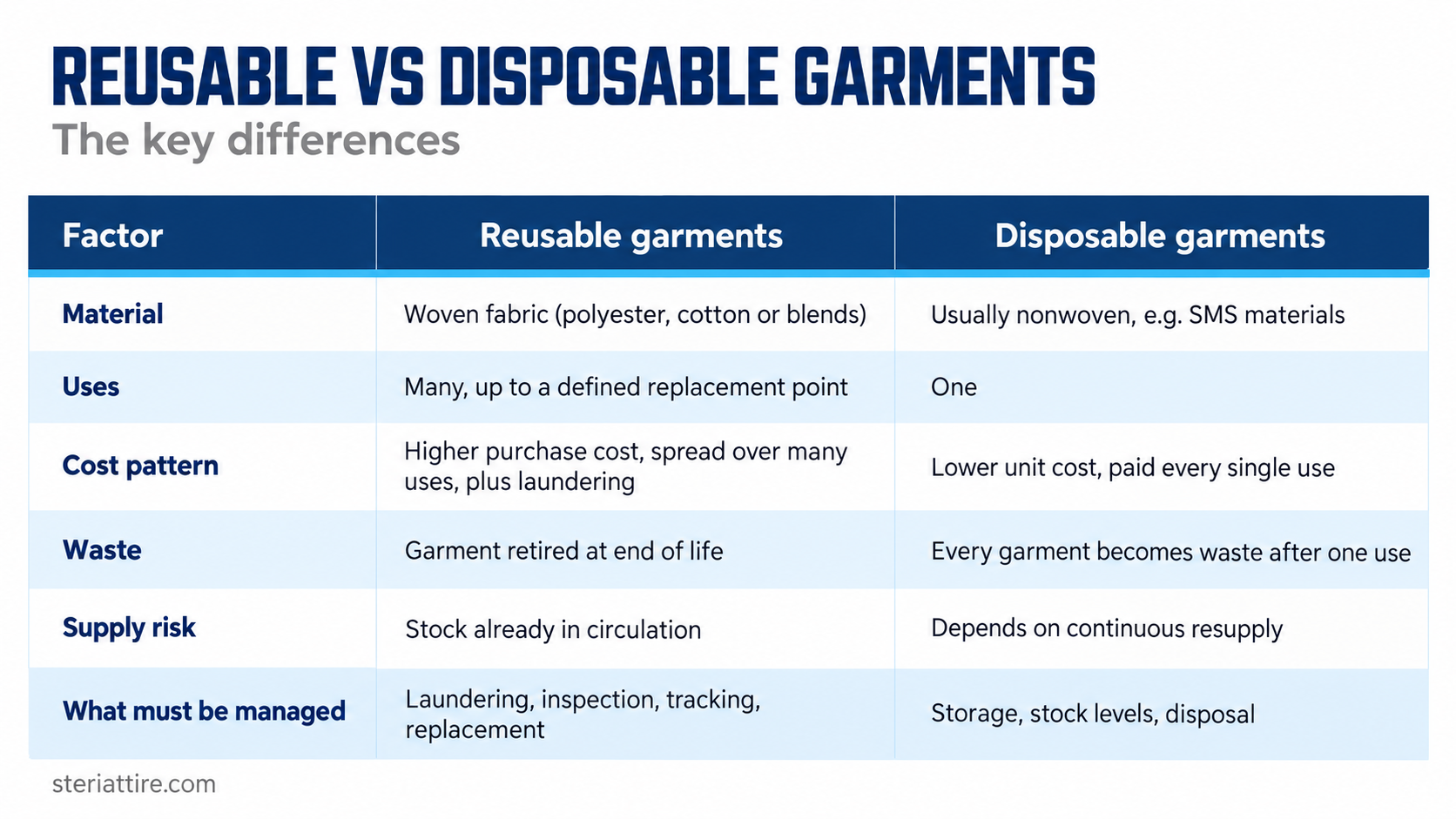
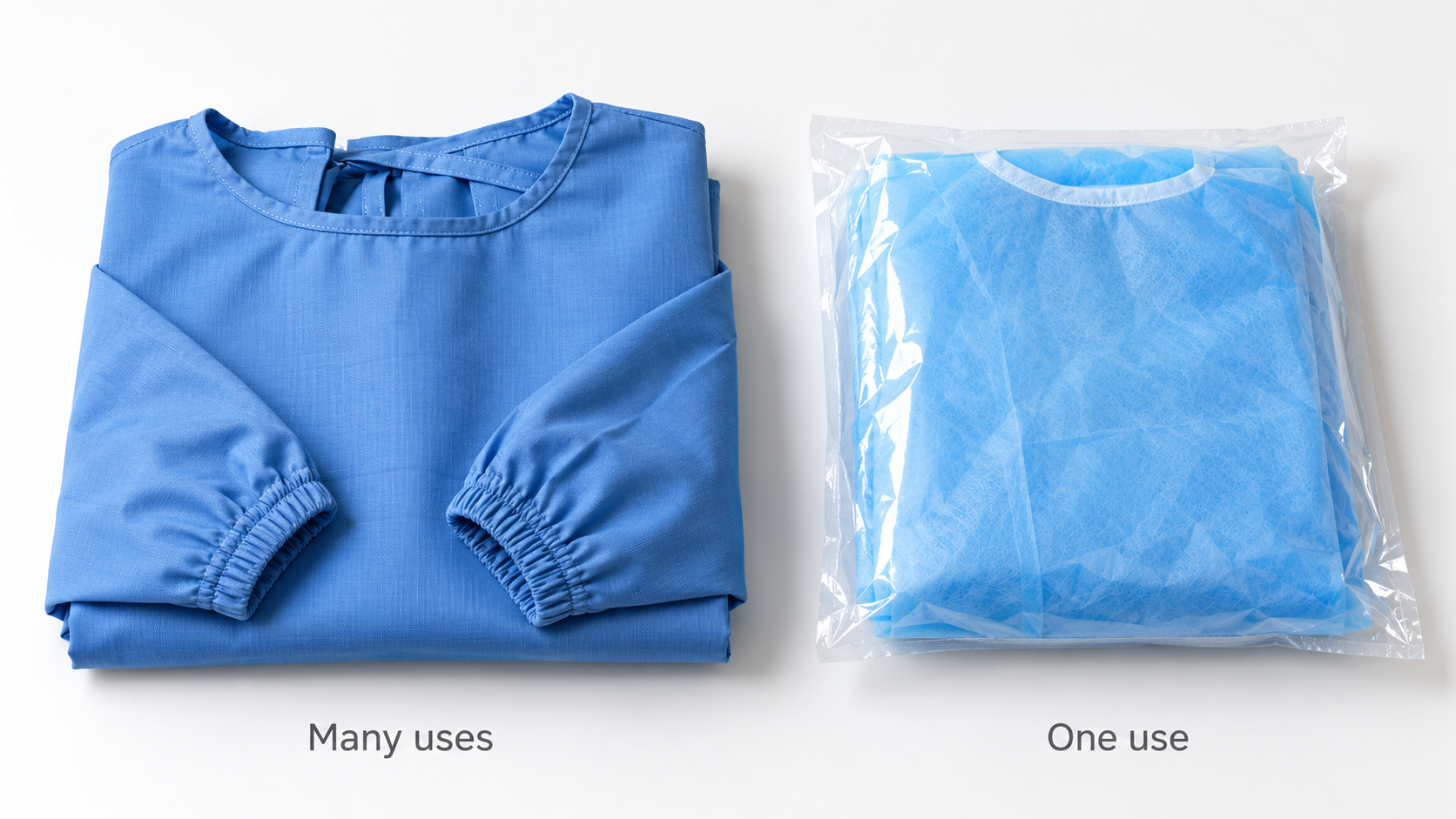
Reusable hospital garments are made from woven fabrics designed to be laundered and worn many times. Disposable garments, usually nonwoven, are worn once and discarded as waste. Neither is better everywhere. Hospitals use both because tasks differ in exposure, frequency and urgency, and the choice of garment follows the task.
A lab coat worn through a ward round, a nurse gown worn for routine care and an isolation gown worn for a single patient contact are different jobs. Single-use garments suit short, high-contact tasks where a fresh garment every time is the simplest control. Reusable garments suit everyday wear, where the same type of garment is used again and again by the same staff.
Reusable vs disposable hospital garments, the key differences
Durability, repeated washing and maintenance
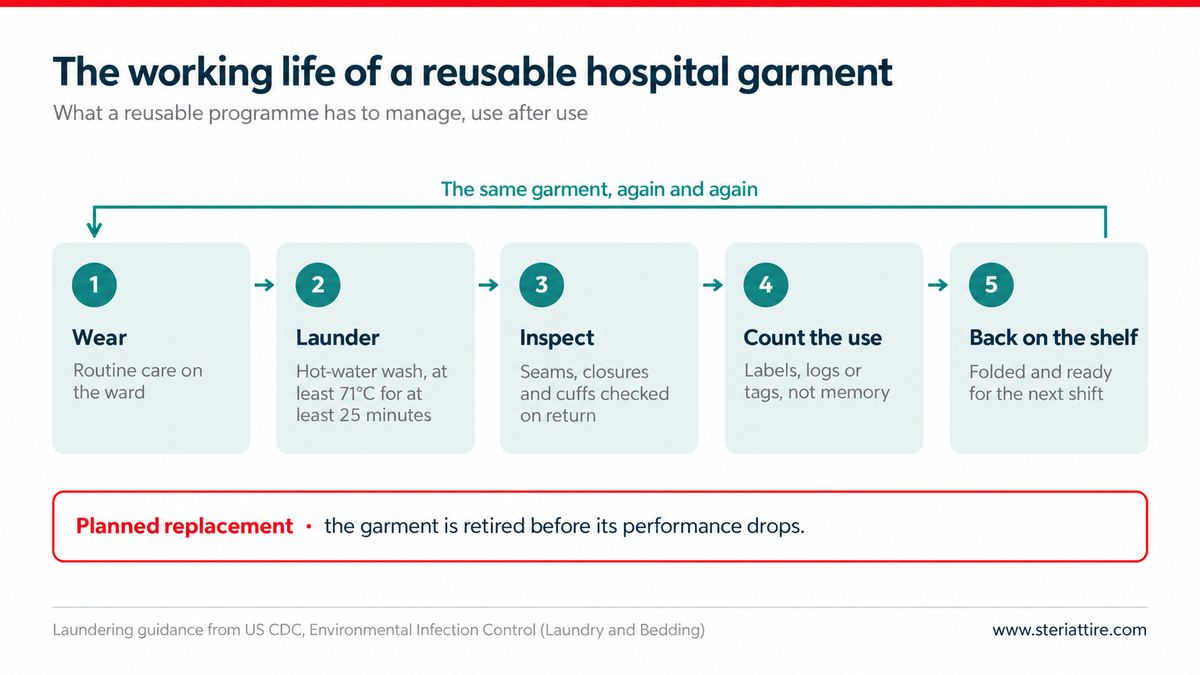
A reusable garment earns its value through repeat use, so its fabric and construction must survive a hospital laundry. The US CDC notes that hot-water washing at a minimum of 71°C (160°F) for at least 25 minutes is commonly recommended for healthcare textiles. That is a demanding process, repeated again and again.
Wear does not always show in the fabric, and it often shows first in seams, closures and cuffs. That is why a reusable programme needs more than a supplier. It needs four things in place.
- A laundry process suited to the garment’s fabric.
- Inspection on return, with clear rules for repair or withdrawal.
- A way to count uses, so the garment’s history is not left to memory.
- Planned replacement before performance drops.
Disposable garments shift the maintenance load to stock management and waste handling. India’s Bio-Medical Waste Management Rules, 2016, notified on 28 March 2016, place items contaminated with blood or body fluids in the yellow category, for treatment by incineration, plasma pyrolysis or deep burial. Every disposable gown used in a contaminated task joins that stream.
Comfort and everyday wear
Comfort matters on a twelve-hour shift. A garment that is hot, stiff or noisy gets adjusted, loosened or taken off early, which defeats its purpose.
Woven reusable garments can be made from fibres that hold moisture and let the body breathe, such as cotton, or from blends that balance comfort with easy care. They also come in proper sizes with pockets and cuffs that suit routine work. Disposable gowns are built mainly for one-time barrier use, and the experience of wearing them for long periods varies with design and material.

When reusable garments can be a practical choice
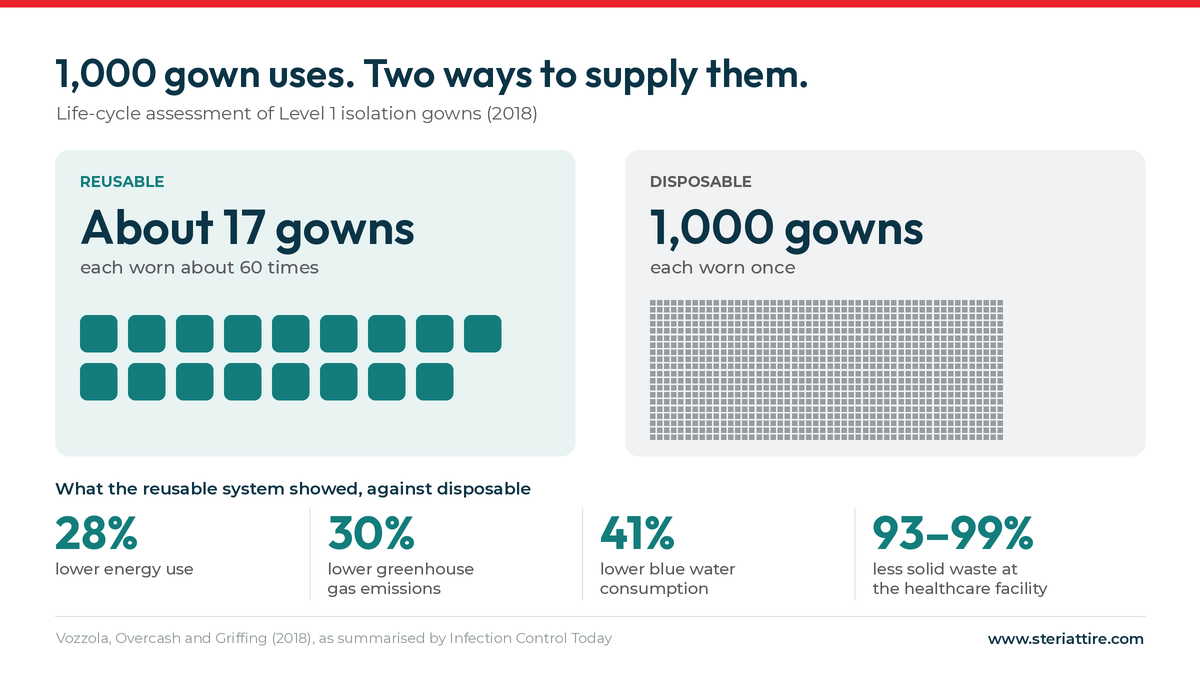
The clearest evidence comes from life-cycle assessments. A 2018 study by Eric Vozzola, Michael Overcash and Evan Griffing compared 1,000 uses of Level 1 isolation gowns, served either by 16.7 reusable gowns used 60 times each or by 1,000 disposable gowns. As summarised by Infection Control Today, the reusable system showed 28% lower energy use, 30% lower greenhouse gas emissions, 41% lower blue water consumption and 93–99% less solid waste at the healthcare facility.
Supply is the other argument. On 3 March 2020, WHO reported that gown prices had doubled since the start of the COVID-19 outbreak and that industry needed to raise PPE manufacturing by 40%. In April 2020, a Premier Inc. survey of about 700 US hospitals found 74% named isolation gowns as their top shortage concern, partly because masks and gowns depend on the same SMS materials.
Reusable garments tend to make sense in these situations.
- The same garment type is worn daily by many staff, such as lab coats and nurse gowns.
- The facility has access to a reliable, controlled laundry.
- Waste reduction is a stated goal.
- Supply security matters as much as unit price.
Factors healthcare facilities should consider before selecting garments
Before choosing, it helps to answer these questions.
- Which task is this garment for? Compare barrier needs against exposure.
- What laundry will it go through? Temperatures, chemicals and drying must suit the fabric.
- How will uses be counted? Labels, logs or tags.
- Who inspects returns, and against what checklist?
- What is the total cost per use, including laundering and replacement as well as the purchase price?
- What happens at the end of life? For reusables, retirement, and for disposables, biomedical waste handling.
- What certifications does the manufacturer hold?
How MEDIONE fits into everyday hospital garment requirements
MEDIONE by SteriAttire is our range of reusable hospital garments for personnel attire. It includes our Reusable Nurses Gown and Reusable Doctor’s Coat, both in sizes S to 4XL, along with isolation gowns and a new Lab Coat range in four fabrics (Poly, 100% Cotton, Poly Cotton 65/35 and Poly Viscose 75/25).
Our Nurses Gown has elastic cuffs that sit well with gloves, and is tear-resistant, wrinkle-free, fade-resistant and machine washable for repeated use. Our Doctor’s Coat is shrink-free, breathable and lint-free, with pockets and a soft finish for long hours. Our 100% cotton white fabric is 270 GSM and is made for 80+ wash cycles, and we recommend washing it with a non-ionic detergent. Where a hospital wants to track each garment, we can stitch in RFID tags as an optional add-on. SteriAttire is ISO 13485:2016 certified and CDSCO approved.
A well-chosen reusable garment goes to the laundry at the end of a shift and comes back folded and inspected, ready for the next one. Getting that choice right is a quiet decision that staff feel on every shift.
Explore MEDIONE reusable hospital garments for your facility at steriattire.com
Frequently asked questions
Are reusable hospital gowns better than disposable ones? Neither is better for every task. Reusable gowns suit routine, repeated use with a controlled laundry, while disposable gowns suit single-use, high-contact tasks. Many hospitals use both.
Are reusable isolation gowns better for the environment? A 2018 life-cycle assessment of Level 1 isolation gowns by Vozzola, Overcash and Griffing found reusable gowns used 28% less energy, emitted 30% fewer greenhouse gases and generated 93–99% less solid waste at the facility than disposable gowns.
What are AAMI PB70 levels for gowns? ANSI/AAMI PB70 classifies gowns into Levels 1 to 4. Levels 1 to 3 indicate increasing water resistance, and Level 4 is tested for resistance to blood and viral penetration.
How are disposable gowns disposed of in Indian hospitals? Under India’s Bio-Medical Waste Management Rules, 2016, items contaminated with blood or body fluids go into the yellow category for incineration, plasma pyrolysis or deep burial.
Sources
- Life Cycle Analysis of Isolation Gowns Gives the Advantage to Reusables · Infection Control Today
- Standards and Specifications, Protective Clothing · NIOSH, US CDC
- Laundry and Bedding, Environmental Infection Control · US CDC
- Shortage of personal protective equipment endangering health workers worldwide · WHO (2020)
- Isolation Gowns Replace N95 Masks as the Top Shortage Concern · Premier Inc. (2020)
- Biomedical Waste Management Rules 2016, Salient Features · AIIMS New Delhi
- MEDIONE reusable hospital garments · SteriAttire