


Cleanrooms vs controlled environments
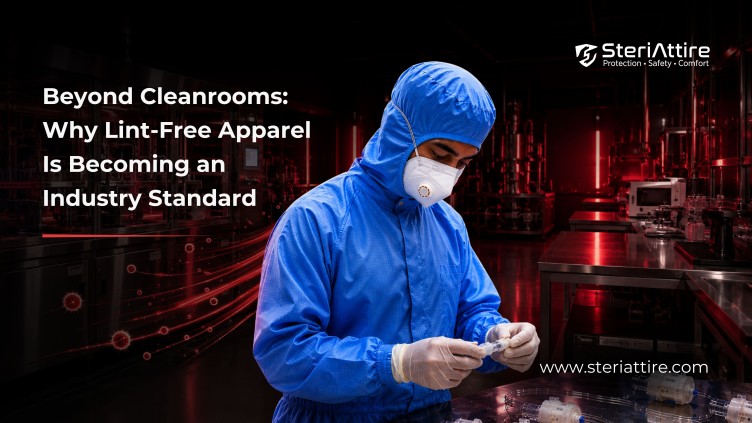
The cleanrooms face a common challenge: particulate contamination. Any movement, be it minute or big, trivial or important, tends to shed particles from the personnel’s hair, skin, and garment. And for maintaining the integrity of the cleanroom, lint-free apparel was viewed primarily as a requirement for cleanrooms and highly controlled manufacturing environments. The perception is now changing, making the lint-free apparel not just a regulation but an industry standard. As industries place greater emphasis on contamination control, product quality, worker safety, and operational efficiency, lint-free garments are becoming an essential part of everyday workplace standards.
Why contamination control extends beyond pharmaceuticals
The levels of hygiene compliance and product safety are becoming increasingly stringent across sectors ranging from pharmaceuticals and healthcare to electronics, food processing, laboratories, and precision manufacturing. In these facilities, loose lint and textile particles can contaminate sensitive products, interfere with manufacturing processes, or compromise the controlled environments.
As is rightly practised, “Prevention is better than cure”: preventing particle contamination is far more effective than dealing with it after it occurs. This proactive approach calls for lint-free apparel.
Operational benefits of low-lint garments
Lint-free clothing is specially designed to minimise fibre shedding. Made from specially selected fabrics and constructed to reduce particle generation, they maintain cleaner working environments while providing employees with comfortable, reliable protection. Modern manufacturing facilities are increasingly required to demonstrate consistent contamination-control practices. Donning appropriate apparel is a part of the contamination control strategy.
Cleaner clothing leads to a cleaner environment, hence safer processes
Controlling particles can help protect products and maintain hygienic conditions in pharmaceutical, medical, and food & beverage facilities, while in electronics manufacturing, it helps maintain the efficiency and integrity of instruments and manufactured products.
Choosing garments based on application
Good-quality lint-free garments are designed for repeated use, cleaning, and demanding workplace conditions, making them a practical long-term investment for organisations in their contamination control program, without the need to constantly replace disposable apparel.
Workplace garments are associated with long productive hours and must be comfortable for the wearer. The protective garment needs to balance cleanliness, functionality, breathability, and ease of movement to make it conducive to personnel use. Modern lint-free apparel is increasingly designed with these workplace realities in mind, helping employees stay comfortable while following strict hygiene and contamination-control protocols.
Clean environments start with smart choices, and the right apparel is an important one.
How STERILINEX supports cleaner manufacturing
At SteriAttire, we believe the future of protective apparel goes beyond simply meeting cleanroom requirements. Our range of lint-free garments, STERILINEX, has been thoughtfully designed and manufactured for cleanroom facilities that help businesses reduce contamination risks, support compliance, protect product integrity, and build more reliable operations for tomorrow.