

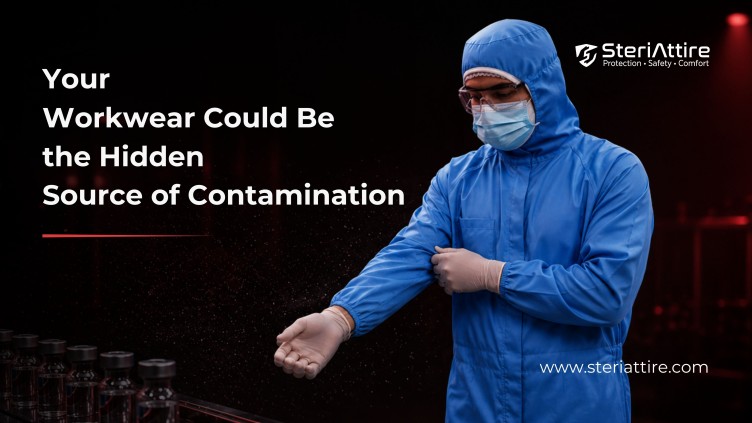

Going into a cleanroom wearing a clean garment and maintaining the best possible hygiene? Or wearing a simple protective garment? Or are you wearing a specialised protective kit to maintain the cleanroom’s sterility?
Why do standard garments shed fibers?
In controlled environments like laboratories and pharmaceutical manufacturing in healthcare, the contamination comes from the least expected places. Surfaces, equipment, and the overall environment are meticulously cared for, while personnel’s garments are often overlooked, which can lead to contamination if they are not properly selected, handled, and maintained.
Hidden contamination risks
Every day, garments interact with microorganisms, particles, chemicals, bodily fluids, and other contaminants. Without appropriate precautions, these contaminants can be carried by employees from one area to another, resulting in compromised hygiene, product quality, and workplace safety.
Industries Affected
A protective garment serves as a barrier between the wearer and the working environment. But what if the same barrier is a source of contamination? Particles and microorganisms can settle on garments during routine activities. Touching potentially contaminated surfaces, moving between work zones, or improperly donning and doffing protective clothing can further increase the risk of transferring contaminants. From pharma facility to electronic production, particle contamination affects all.
Even the simplest-looking regular habits, such as wearing the same garment across both controlled and uncontrolled areas, storing used garments incorrectly, or reusing clothing without appropriate cleaning, can undermine an otherwise effective contamination-control programme.
Why lint-free apparel matters
While choosing protective clothing, the lifecycle is equally important as the choice of material. Workwear should suit the environment in which it is used, and garment cleaning, disinfection, storage, transportation, and replacement should follow established procedures. Properly managed work garments help reduce the movement of particles and microorganisms and support consistent environmental-control practices. Such garments help to maintain a sterile cleanroom with stringent hygiene requirements. For controlled environments, factors such as low-lint materials, garment design, durability, comfort, and validated cleaning processes are considered while sourcing. Choosing the right workwear
Different environments demand different levels of protection, fabric characteristics, garment construction, and laundering processes. The bottom line of protective clothing is not just a set of garments for employees, but rather creates a reliable barrier that supports the facility’s overall contamination-control strategy.
After the material comes employee practices. Staff should understand how to don and doff garments correctly, where protective gear may be worn, and how to handle used PPE. A well-designed workwear programme combines the right garments with the right processes.
How STERILINEX helps reduce particle shedding
Contamination control is a system, and every component matters. Workwear is not just a piece of uniform, but is more functional in maintaining the cleanroom. At Steriattire, we understand that reliable protective workwear is essential to maintaining hygiene and controlled work environments. We select the right type of material and design it ergonomically, keeping your compliance requirements in mind. Our special range of products, STERILINEX, assists you in giving a lint-free garment for your cleanroom needs. Because when contamination control matters, what your team wears matters too.
#Cleanroom #CleanroomSafety #ContaminationControl #ProtectiveWear #Workwear #PPE #CleanroomGarments #SterileEnvironment #SafetyFirst #InfectionControl #PharmaceuticalIndustry #HealthcareSafety #SterileWear #SteriAttire #ProtectionSafetyComfort