

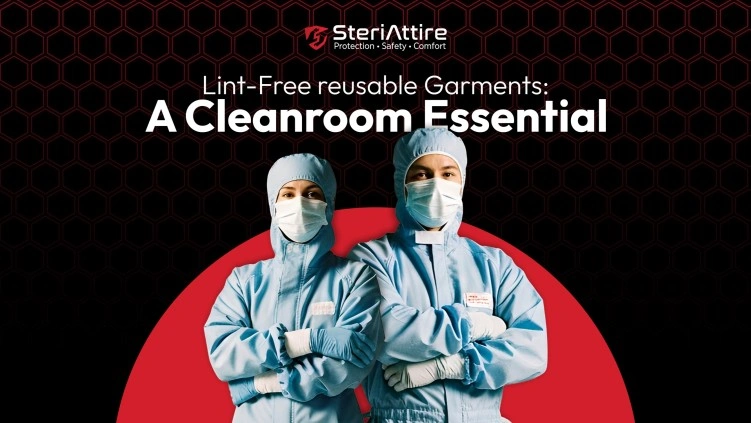

In pharmaceutical cleanrooms, contamination control is a regulatory obligation. Among the critical factors that maintain cleanroom integrity, cleanroom garments play a decisive role. Lint-free apparel is mandatory because human operators represent the largest source of contamination within controlled environments. Every movement, fabric fibre, and airborne particle has the potential to compromise product Quality & safety, regulatory compliance, and patient health.
👤 Human Activity as the Primary Source of Contamination
Cleanroom audits and industry studies consistently identify personnel as the main contributors to particulate and fibre contamination. Shedding from clothing, particularly loose fibres and lint, can introduce:
🔹 Particulate contamination
🔹 Microbial carriers
🔹 Foreign matter in sterile pharmaceutical products
For this reason, pharmaceutical cleanrooms mandate the use of low-lint or lint-free garments as a fundamental contamination control measure.
🧵 Understanding Lint and Its Risks in Pharmaceutical Cleanrooms
Lint consists of microscopic fibres released from fabric surfaces during wear, movement, or laundering.
In pharmaceutical cleanrooms, lint can:
🔹 Settle on exposed products or components
🔹 Disrupt sterile processing conditions
🔹 Act as a carrier for microorganisms
🔹 Lead to batch rejection or regulatory audit observations
Once introduced, lint is difficult to detect and remove, making preventive control essential.
📋 Regulatory Expectations for Cleanroom Apparel
Pharmaceutical regulations classify cleanroom garments as critical control elements rather than standard workwear.
Key regulatory frameworks include:
✔ IEST-RP-CC003.4, EN 14065
✔ ISO 14644
✔ ISO 14698-1
✔ EN 61340-5-1
✔ EU GMP Annex 1
✔ WHO GMP
✔ FDA cGMP guidelines
These frameworks emphasise particle control, fibre shedding prevention, validated garment systems, and controlled cleanroom apparel. Lint-free garments directly support compliance with these requirements.
⚠️ Limitations of Conventional Fabrics
Traditional fabrics such as cotton or cotton blends, Polycotton are unsuitable for pharmaceutical cleanrooms because they:
❌ Shed fibres during normal movement
❌ Absorb moisture and contaminants
❌ Degrade with repeated laundering
❌ Increase particle generation over time
❌ Lack of Electrostatic Control
❌ Poor Barrier Efficiency
As a result, these fabrics do not meet the requirements of Grade A, B, and C cleanroom environments (EU GMP Annex 1 Classification (Grade A–D)).
🧬 SteriAttire’s Lint-Free Fabric Technology
SteriAttire designs cleanroom garments using polyester microfiber fabrics specifically selected for pharmaceutical and controlled environments.
Key features include:
✔ Lint-free and low-particle release properties
✔ Smooth fabric surfaces that minimise fibre shedding
✔ Durable construction for repeated laundering
✔ Breathable yet protective design for extended working hours
✔ Consistent performance throughout the garment lifecycle
🔁 Lifecycle Control of Reusable Lint-Free Garments
In pharmaceutical cleanrooms, reusable garments must maintain lint-free performance throughout their usable life.
SteriAttire reusable cleanroom garments:
✔ Are engineered for more than 50 wash cycles, with select designs supporting up to 100 washes
✔ Undergo inspection after every laundering cycle
✔ Are removed from service if damage or fabric degradation is detected
This approach ensures ongoing compliance, safety, and contamination control.
✅ Conclusion
Lint-free garments are mandatory in pharmaceutical cleanrooms because contamination prevention begins with personnel. By controlling fibre shedding at the source, pharmaceutical manufacturers safeguard product quality, regulatory compliance, and patient safety.
Many lint-free garments also incorporate ⚡ anti-static carbon fibers to dissipate static charges, which can attract particles or damage sensitive electronic equipment used in cleanroom operations.
At SteriAttire, cleanroom garments are developed with lint-free fabric technology, regulatory alignment, and real-world pharmaceutical applications in focus.
In pharmaceutical cleanrooms, what personnel wear directly impacts what they produce. Lint-free garments are an indispensable component of a comprehensive contamination control strategy, ensuring a safe, sterile, and compliant manufacturing environment.