

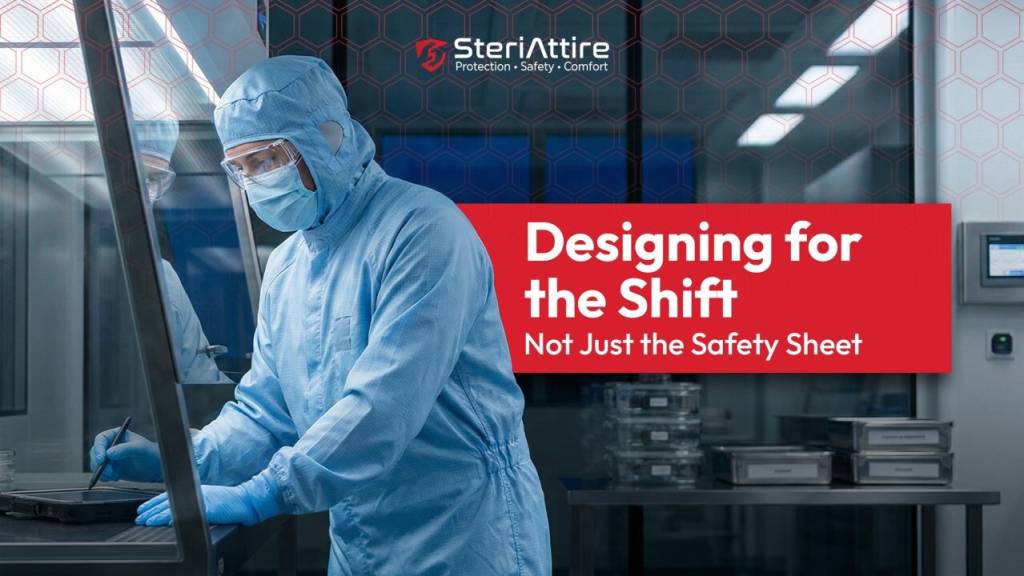
In highly regulated areas like pharmaceutical manufacturing, cleanrooms, and healthcare facilities, protective clothing acts as a critical, engineered barrier not merely a formality designed to prevent human-borne contamination from compromising sterile environments and protecting workers from hazardous materials. Humans are the primary source of contamination in these areas, with the potential to shed millions of skin cells and microorganisms per minute, making specialized garments essential for maintaining product integrity and safety.
At SteriAttire India Pvt. Ltd., clothing engineering blends material science, ergonomic design, and real-world usability to accomplish this. SteriAttire’s protective and cleanroom gear is designed to perform reliably over long periods of time from donning processes to shift completion while maintaining wearer comfort and sterile integrity.
Why Shift-Centric Design Matters
Protective garments are often assessed using static performance characteristics such as barrier resistance, particulate filtration, and anti-static qualities. However, industrial experience demonstrates that operator comfort, mobility freedom, and tiredness reduction have a major impact on both compliance and performance during lengthy work shifts. Poorly constructed clothes can limit movement, raise metabolic heat stress, and lead to operator noncompliance. Ergonomically constructed protective apparel reduces musculoskeletal strain and discomfort, allowing workers to remain focused and productive for long periods of time.
Ergonomics and Functional Considerations
SteriAttire’s gear, which includes Reusable & Autoclavable ESD anti-static coveralls and disposable Cleanroom Garments (Gamma IR), has ergonomic features that go beyond basic safety criteria. Features like articulated cuts, flexible materials, and strategically positioned closures eliminate pressure spots and improve mobility, which is important in applications that require repeated or precise action.
Thermal comfort and breathability are also important aspects of wearable design. Materials are chosen to balance barrier performance and airflow, limiting heat buildup, which can cause to fatigue during an 8-12 hour shift. Excessive heat and moisture can also create particles, weakening the garment’s intended contamination control.
Operational Efficiency and Contamination Control
Shift-centric design also increases operating efficiency. Easy-to-wear apparel with simple closures and secure sealing mechanisms lowers gowning time and human error, which is critical in high-throughput cleanrooms and aseptic processing zones. Non-linting seams and bonded closures are examples of thoughtful design elements that reduce particulate generation, whereas consistent interface design (e.g., cuffs and hoods) supports contamination control protocols.
Extending the Safety Sheet to Real-World Work
Finally, planning for the change involves integrating human-centred engineering with regulatory performance requirements. It entails anticipating how a garment would react under lengthy wear, movement, temperature stress, and task complexity, translating a safety sheet specification into a realistic, performance-driven solution that protects both people and objects.
Explore SteriAttire’s range built for real-world performance:

